 Susan Ann Walker, Fantasy Author
July is for crowded markets, traveling bards, and unexpected quests
07/17/26 09:46 Filed in: Book List
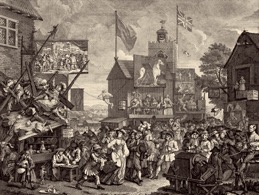
It's high summer, which means it's fair time—now and in the Middle Ages.
I associate summer with going to the county fair. (The Orange County, California fair near where I live starts today.)
Researching my Tales From the City of Magic series, I was surprised to learn that medieval fairs and market gatherings also were mostly held in mid-summer. (I'd guessed they were mainly after the fall harvest.) Turns out, large fairs in the Middle Ages peaked in the summer because the good weather allowed merchants to travel, and there were often tie-ins with summer religious feast days.
Real-life examples: The Boston Fair, a gathering of wool merchants from the Hanseatic League and Flanders, held in England in July, and the "hot fair" of Troyes, France, starting on the first Tuesday after St. John's Day, part of the Champagne Fairs series that were a premier market for textiles, leather, fur and spices in medieval Europe.
That said, despite the summer peak, fairs were actually spread year-round so merchants could travel a circuit. There were major gatherings in the fall, like the fair of St. Ayoul of Provins on the Exaltation of the Cross (September 14) and the Winchester Fair; and in winter, like the "cold fair" also held in Troyes on the day after All Saint's Day.
For reasons of plot, and my own preferences, I decided my City of Magic would have fairs in the fall and winter, not the summer. Although who knows, that might change in future books if I think up a good summertime fair plot idea. Schedules are subject to change without notice, especially when there's magic involved.
Regardless, plenty of great fantasy novels use summer fairs, solstice festivals, or bustling medieval markets as key settings. Here are a few I'd recommend for a trip to the medieval fair this month:
The Name of the Wind (The Kingkiller Chronicle Book 1) by Patrick Rothfuss
The hero Kvothe’s early life includes scenes at traveler fairs and performance circuits, where musicians, tinkers, and merchants gather. These fairs are lively, communal, and full of the “everyday magic” of medieval life.
The Lies of Locke Lamora (Gentleman Bastards, Book 1) by Scott Lynch
Camorr’s bustling markets — especially the Shifting Market — are vivid, chaotic, and full of color. Not a summer fair, but an excellent example of medieval‑fantasy commerce as worldbuilding.
The Ranger’s Apprentice series by John Flanagan
Several books feature village fairs, harvest festivals, and medieval markets, often used as settings for danger, diplomacy, or character bonding.
The Wheel of Time series by Robert Jordan (also an Amazon Prime TV series)
Multiple books feature village festivals, traveling shows, and market fairs, especially early in the series. The Emond’s Field Bel Tine festival is a classic “pre‑adventure fair” moment.
The Witcher Saga series by Andrzej Sapkowski (also a Netflix TV series)
Markets and fairs appear frequently — from bustling medieval bazaars to festival gatherings where bards perform and trouble brews.
Shadow of the Jade Cat by Susan Ann Walker (yours truly)
Finally, a little shameless self-promotion: The City of Magic's great trade fair is the backdrop for a magical mystery, as the city's magister races to stop a killer created by a goddess.
Historically, fairs were major economic and social events, so they're perfect to set the stage in a medieval fantasy. Fairs gathered farmers, merchants, bards and travelers. They're where rumors spread, strangers arrive, and quests begin.
I'll see you at the fair!


